
Does your Edmonton home have enough attic insulation? In many cases, homeowners do not know their attic insulation level until they experience comfort issues, rising heating costs, or visible winter performance problems. Adequate attic insulation helps reduce heat loss through the roof assembly and supports more consistent indoor temperatures during Edmonton’s long heating season.
A properly insulated attic does not necessarily require replacement or upgrades. Some homes already have sufficient insulation levels, while others may only need a top-up. Stewart Insulation helps homeowners determine whether their attic insulation remains adequate for current performance expectations.
Why Insulation Adequacy Matters in Edmonton’s Climate
Edmonton experiences extended periods of cold weather that place continuous demand on a home’s building envelope. Because warm air naturally rises, the attic becomes one of the most significant areas for heat loss when insulation levels are inadequate.
Insufficient attic insulation can increase heating demand, contribute to uneven indoor temperatures, and create conditions that affect roof performance during winter. Even moderate insulation deficiencies can become more noticeable during prolonged cold periods.
Adequacy is not determined solely by insulation depth. Coverage consistency, insulation condition, and overall attic performance also affect how effectively the attic resists heat transfer.
Performance Signs Your Attic May Be Under-Insulated
Insulation performance issues often appear through observable symptoms before a homeowner knows the attic’s actual insulation level. While a single symptom does not automatically confirm inadequate insulation, multiple signs often justify further investigation.
Ice Dams and Snow Melt Patterns
Ice dams form when heat escaping from the home warms portions of the roof surface. Snow melts over the warmer roof areas and can refreeze near colder roof edges.
Uneven snow melt patterns may indicate that heat is escaping through sections of the attic. While roof ventilation and air leakage can also contribute to ice dam formation, insulation deficiencies are frequently part of the overall problem.
Cold Ceilings and Draft Sensation
Rooms beneath under-insulated attic areas may feel colder even when the thermostat setting remains unchanged. Homeowners sometimes notice cooler ceiling surfaces or discomfort in upper-floor rooms during cold weather.
This sensation does not always mean outdoor air is entering the room directly. In many cases, heat loss through the ceiling creates colder interior surfaces that affect comfort levels.
Sudden Energy Bill Spikes
Heating costs often increase during colder months, but unusually large increases without corresponding changes in energy rates or weather patterns may indicate a building envelope issue.
Attic insulation is only one possible cause. However, when higher heating costs occur alongside other attic-related warning signs, insulation adequacy becomes an important factor to evaluate.
How to Assess Your Current Insulation Level
Homeowners can perform a basic attic inspection to determine whether insulation levels appear reasonably consistent and whether obvious deficiencies exist. This assessment does not replace a professional inspection but can help identify situations that warrant further evaluation.
Measuring Insulation Depth Safely
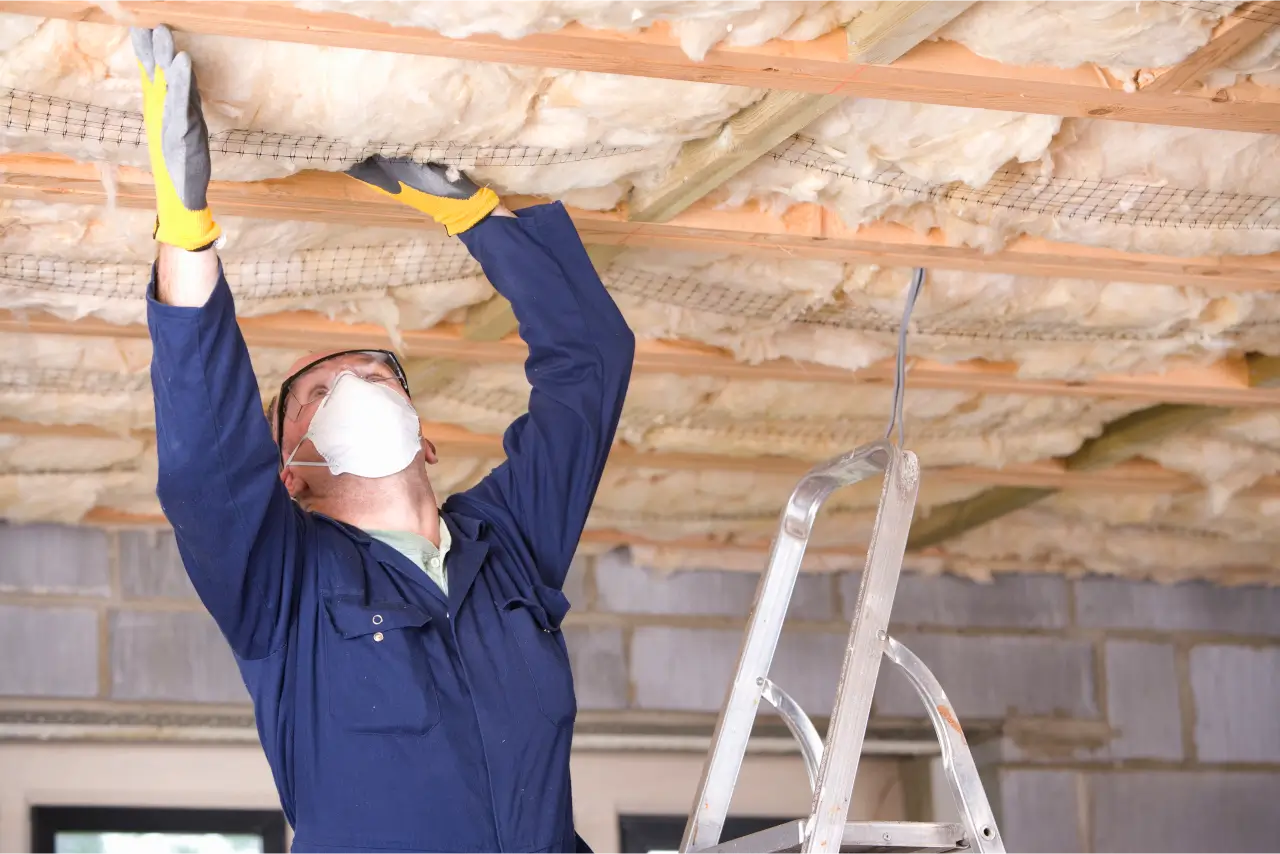
If attic access is available and conditions are safe, insulation depth can be measured using a ruler or measuring tape placed vertically through the insulation to the attic floor.
Measurements should be taken from multiple locations because insulation depth can vary throughout the attic. Homeowners should avoid stepping between ceiling framing members, as doing so can damage the ceiling below and create a safety risk.
Understanding Approximate R-Value From Depth
Insulation depth provides a rough indication of overall thermal resistance. Different insulation products achieve different R-values at different depths, so depth alone does not determine exact performance.
As a general guideline, attic insulation levels commonly recommended for Edmonton homes often fall within the R-50 to R-60 range. If measured insulation depth appears significantly below what is typically required to achieve those levels, additional evaluation may be worthwhile.
When Visual Inspection Is Not Enough
A visual inspection may identify low insulation levels, missing coverage, or obvious settling. However, some performance issues are not visible from the attic hatch.
Compressed insulation, hidden air leakage, moisture-related concerns, and insulation concealed beneath newer layers can affect performance without being obvious during a basic inspection. In these situations, insulation adequacy cannot be determined reliably through visual observation alone.
When a Professional Attic Assessment Is Recommended
A professional attic assessment is recommended when multiple warning signs are present, insulation depth appears inconsistent, energy costs have increased unexpectedly, or attic conditions cannot be evaluated safely from a homeowner inspection.
Professional assessments are also valuable when homeowners are unsure whether the attic requires no action, a simple top-up, or additional investigation. Uneven insulation coverage can be as problematic as low insulation depth because large gaps allow concentrated heat loss even when average insulation depth appears acceptable.
An assessment can identify whether insulation levels, coverage consistency, moisture conditions, or other attic performance factors require attention.
Next Steps: Top-Up vs Further Evaluation With Stewart Insulation
If attic insulation remains evenly distributed, dry, and reasonably close to recommended levels, a top-up may be sufficient to improve overall performance. When attic conditions show inconsistent coverage, uncertain insulation quality, moisture concerns, or unexplained performance problems, further evaluation is often the better first step.
Stewart Insulation evaluates insulation depth, coverage consistency, attic condition, and visible performance concerns before recommending a course of action. This allows homeowners to determine whether no action is needed, whether a top-up is appropriate, or whether additional investigation should occur before insulation is added.