

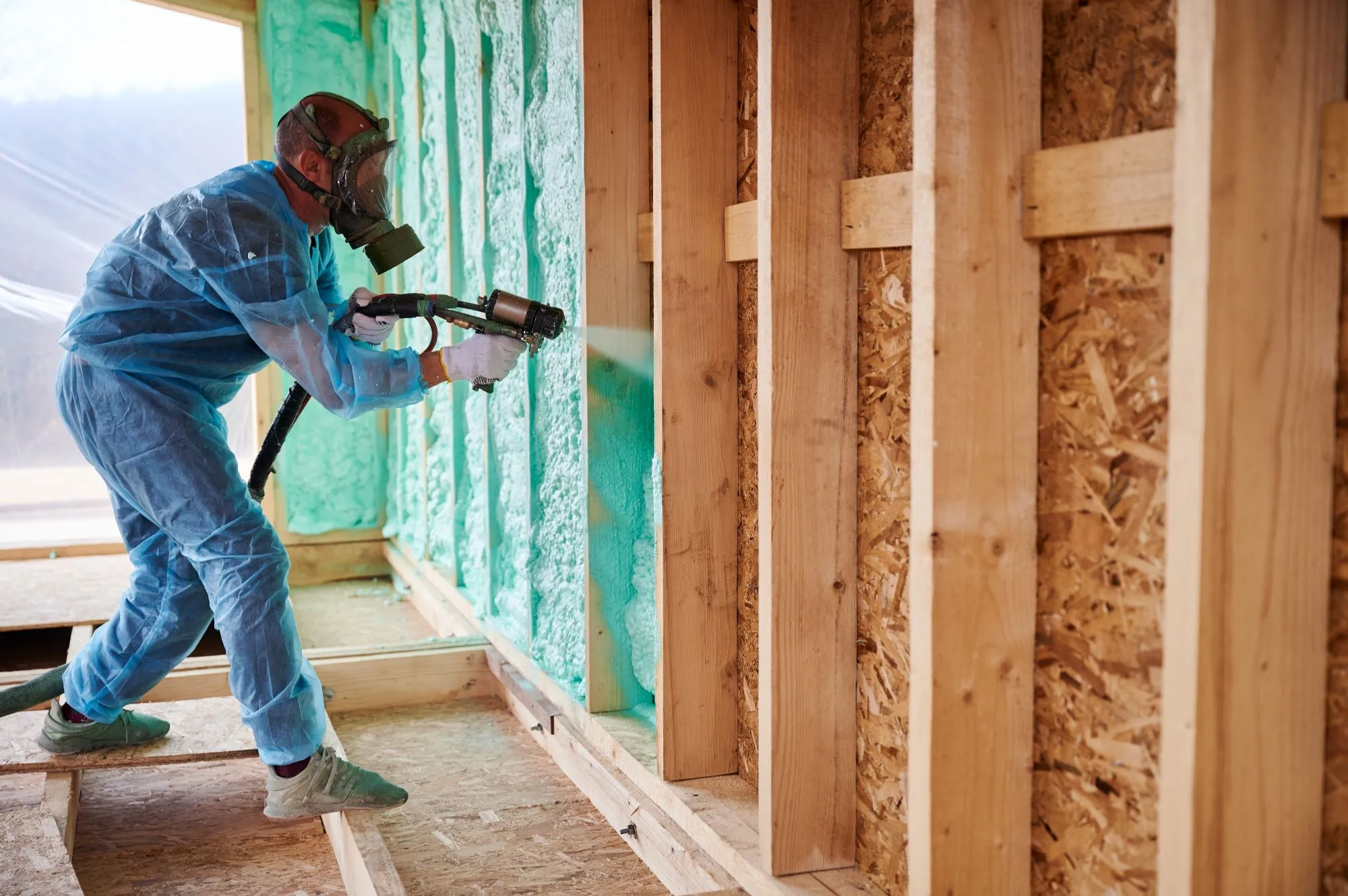
Blow-in vs batt insulation for an Edmonton attic is mainly a choice between continuous loose-fill coverage and fitted sections of insulation. Blow-in insulation is generally better suited to irregular attic floors, obstructions, and top-ups over suitable existing insulation. Batts are more practical where framing is open, regularly spaced, and accessible enough for accurate fitting. The right method depends on attic layout, existing insulation condition, access, and the amount of preparation required. Stewart Insulation assesses these conditions when planning attic insulation upgrades in Edmonton.
Why Installation Method Matters More Than Most Homeowners Think
Attic insulation performance depends on how consistently the insulation covers the area being insulated. Gaps, compression, uneven depth, and difficult framing details can reduce the effectiveness of an otherwise suitable insulation product.
Loose-fill insulation can cover irregular spaces and extend around many attic obstructions. Batts depend on individual sections being cut and fitted snugly between framing members without gaps or compression.
Neither installation method should be treated as an air-sealing solution. Air leakage through the ceiling plane should be addressed separately before additional insulation makes penetrations and joints harder to reach. This is especially important in cold climates because warm, moist indoor air leaking into a colder attic can contribute to condensation problems.
How Blow-In Insulation Performs in Edmonton Attics
Blow-in insulation, or loose-fill, insulation is distributed across the attic floor to create a continuous layer. It is particularly useful where framing, wiring, plumbing, trusses, and other obstructions make fitting individual insulation sections difficult.
For retrofit work, loose fill can also be installed over suitable existing insulation. This makes it practical for many attic top-ups because serviceable material does not need to be removed simply to create empty framing cavities.
Coverage Around Obstacles and Irregular Framing
Loose-fill insulation works well in irregular and obstructed attic spaces because it can fill small and uneven areas around framing and other obstacles without requiring individual pieces to be cut for each location.
Coverage still needs to remain consistent. Low areas or uneven distribution can leave portions of the attic with less insulation than intended. At roof edges, insulation must also be kept clear of required ventilation paths.
This makes attic layout an important decision factor. The more irregular or obstructed the attic is, the more practical loose-fill coverage often becomes compared with individually fitted batts.
Performance in Older Homes With Existing Insulation
Blow-in insulation can be installed over existing insulation when that material is dry, uncontaminated, and suitable to remain. The existing layer should also not prevent necessary air sealing, ventilation corrections, or repairs from being completed first.
Wet insulation should not simply be covered. The moisture source needs to be corrected and the insulation allowed to dry before additional material is installed. Insulation contaminated by mould or vermin generally requires removal rather than being buried beneath a new layer.
Unknown older insulation requires additional caution. Vermiculite should not be disturbed until the potential for asbestos contamination has been properly assessed.
How Batt Insulation Performs in Open Attic Layouts
Batt insulation comes in preformed sections that are fitted between framing members. It works best where cavities are visible, accessible, and regular enough for the material to fit closely against surrounding framing and adjacent batts.
This makes attic layout an important part of the decision. Batts can provide consistent coverage in straightforward framing, but installation becomes more complicated as the number of obstructions, braces, unusual cavity widths, and difficult edges increases.
Installation Precision and Gaps
Batt insulation needs to fit snugly without being compressed. Sections that are too narrow can leave gaps, while forcing oversized batts into a cavity can compress the material.
Wiring, pipes, cross-bracing, and non-standard framing can require batts to be cut or split so the insulation continues around the obstruction rather than being pushed aside.
Where the attic design allows it, an additional batt layer can sometimes be installed across the framing to improve continuity over the joists. The approach still has to maintain required ventilation and clearances around attic components.
When Batts Make Sense in Renovations
Batts are most practical when renovation work exposes regular framing and provides direct access to each cavity. Open ceilings, additions, and other areas where framing remains visible allow each section to be fitted before the assembly is closed.
They can also be cost-effective in smaller, straightforward areas where little cutting or fitting is required. As the attic becomes more obstructed, labour increases because each piece has to be worked around framing and services.
For broad attic-floor top-ups or irregular layouts, loose-fill insulation can therefore become the more practical installation method.
Performance Comparison in Real Edmonton Conditions
The better installation method depends on the attic rather than one system being universally superior. Existing insulation, framing, ventilation, access, preparation requirements, and the amount of fitting involved all affect the final choice.
|
Method |
Coverage Quality |
Air Sealing Support |
Retrofit Suitability |
Installation Speed |
Cost Range |
Long-Term Settling Risk |
|
Blow-In Insulation |
Strong for irregular layouts and coverage around obstacles when installed evenly |
Does not replace dedicated air sealing |
Well suited to many attic top-ups where suitable existing insulation can remain |
Reduces piece-by-piece fitting in large or irregular attic areas, although preparation still affects total project time |
Stewart Insulation currently lists approximately $1.50 to $4.00 per sq. ft. across its blow-in fiberglass and cellulose attic ranges, depending on material and project conditions |
Depends on the loose-fill product and installation method. Installed coverage should account for the manufacturer’s required settled depth where applicable |
|
Batt Insulation |
Strong in regular, accessible cavities when accurately fitted |
Does not replace dedicated air sealing |
Best suited to exposed framing and cavities that can be individually accessed |
Straightforward in regular framing, but extensive cutting around obstacles increases labour |
Stewart Insulation currently lists approximately $2.00 to $5.00 per sq. ft. for batt insulation, subject to project conditions |
Does not generally settle in the same way as loose fill, but gaps and compression can reduce installed performance |
These ranges are not fixed project prices. Attic size, target insulation level, existing insulation condition, access, material choice, and removal requirements can change the final cost.
Settling can reduce the effectiveness of loose-fill insulation if the final settled depth falls below what is required for the intended insulation value. For that reason, loose-fill installation specifications account for coverage, density, and minimum settled depth rather than relying only on the depth immediately after installation.
When Removal Is Required Before Choosing a Method
Existing insulation does not automatically need to be removed before new insulation is installed. Dry insulation that remains suitable and does not interfere with repairs or air sealing can often stay in place beneath an upgrade.
Insulation damaged or contaminated by mould or vermin generally requires removal. Wet insulation should not be covered until the source of moisture has been corrected and the material is dry.
Removal can also be necessary when existing insulation prevents access for attic repairs, when contamination is present, or when the material has become compacted or otherwise unsuitable for the planned upgrade. Stewart Insulation provides attic insulation removal for contaminated, water-damaged, compacted, pest-affected, and renovation-related conditions.
Older or unidentified materials should not be disturbed without first determining whether special handling is required. Vermiculite is a particular concern because some vermiculite insulation can contain asbestos.
The condition of the existing attic therefore needs to be established before comparing blow-in and batt installation methods. Layout alone is not enough to decide whether a top-up is appropriate.
Choosing the Right Approach for Your Attic With Stewart Insulation
Blow-in insulation is generally better suited to irregular attic layouts, numerous obstructions, broad attic-floor coverage, and top-ups where suitable existing insulation can remain. Batt insulation is more practical where framing is exposed, regularly spaced, and accessible enough for accurate fitting.
Neither method should be selected on material price alone. Existing insulation condition, attic access, preparation, removal requirements, and installation labour can change the total project scope.
Stewart Insulation provides attic insulation installation, upgrades, replacement, and removal in Edmonton. Its attic inspections consider existing insulation depth and condition, ventilation, attic access, and layout before recommendations are made. For homeowners comparing insulation approaches, the attic conditions should determine the scope rather than assuming one installation method is appropriate for every home.