
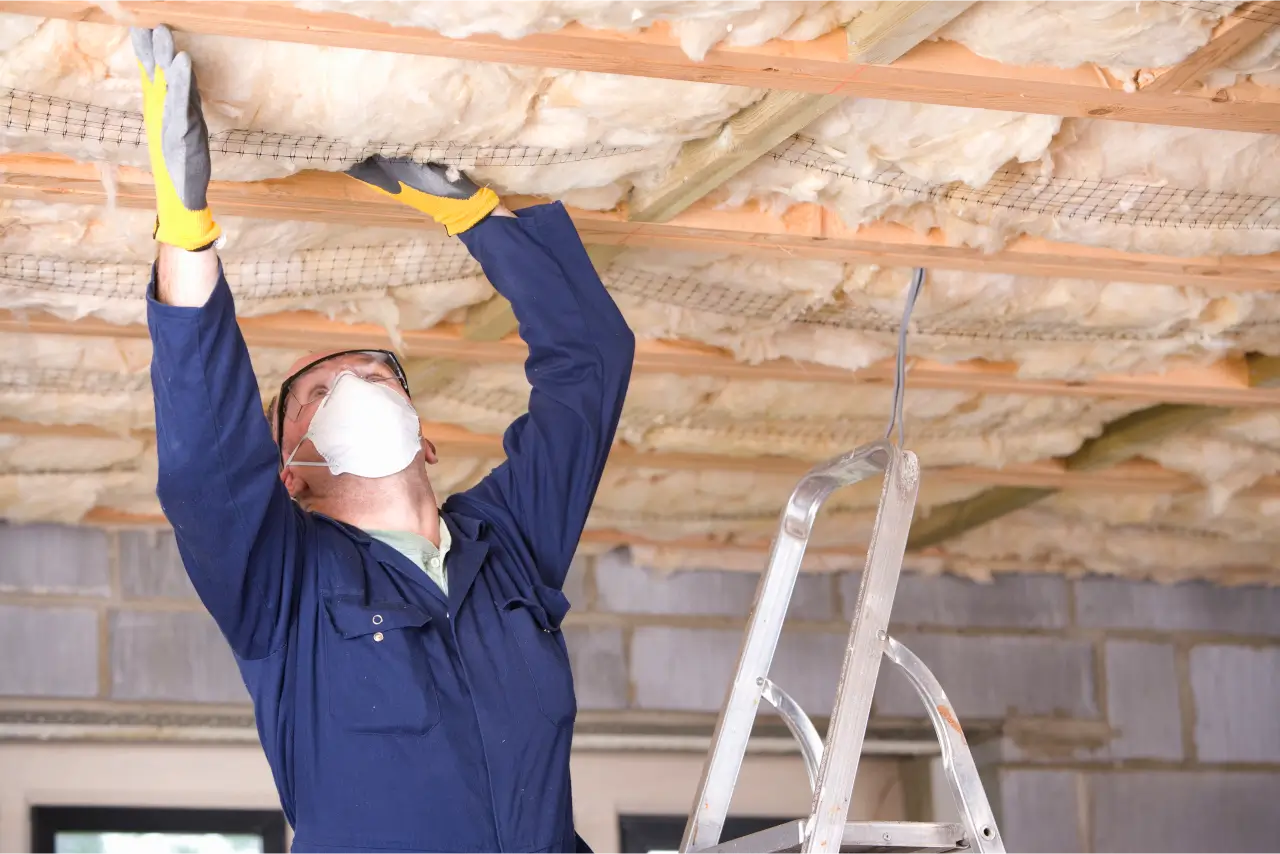
Cost of attic insulation in Edmonton depends on attic size, existing insulation condition, target R-value, material choice, and access. A simple top-up usually costs less than a full attic insulation replacement because it requires less labor and less preparation.
Most Edmonton homeowners invest anywhere from a few thousand dollars for a straightforward top-up to significantly more for projects involving insulation removal and full replacement. Stewart Insulation helps homeowners compare these factors before choosing between blow-in fiberglass, cellulose, removal, or a top-up. Older homes often require a different scope than newer homes because insulation standards, attic conditions, and existing R-values can vary considerably.
What Determines Attic Insulation Pricing
Attic insulation pricing is based on the amount of material required and the labor needed to install it properly. Two homes with the same square footage can have different costs if one attic has low clearance, damaged insulation, poor access, or uneven existing coverage.
A quote should account for the current attic condition, not just the home’s floor area. Attic size, insulation depth requirements, and removal needs typically have the largest impact on pricing, while access challenges and attic layout usually create smaller adjustments. This prevents underpricing that later changes once the attic is inspected.
Attic Size and Depth Requirements
Attic size affects material volume and labor time. A larger attic needs more insulation, more setup time, and more time to spread material evenly across the attic floor.
Depth matters because insulation price increases as the required R-value increases. Higher R-values require more insulation material, which directly increases material volume and installation cost. An attic with very little existing insulation may need significantly more material than an attic that only needs a top-up.
Square footage and existing insulation levels work together when determining cost. A large attic with low insulation levels typically requires more material than a similarly sized attic that already has adequate coverage.
Target R-Value for Edmonton Climate
R-value measures how well insulation resists heat transfer. Because Edmonton experiences long heating seasons and extended periods of cold weather, homeowners commonly target attic insulation levels in the R-50 to R-60 range.
Increasing R-value usually increases project cost because more insulation depth is required. However, the cost increase depends on how much usable insulation already exists and whether the attic can support a top-up without removal.
Accessibility and Labor Complexity
Attic access affects labor cost when technicians need extra time to move equipment, protect the home, or work in tight areas. Low roof slope, limited hatch access, obstructions, and hard-to-reach corners can all increase installation time.
Access complexity does not always change the material cost, but it can change the labor portion of the quote. This is why an attic inspection is more accurate than a flat square-foot estimate.
Cost Differences by Insulation Type
Different insulation types have different cost ranges because they use different materials, installation methods, and labor requirements. Material cost, installation speed, and the amount of labor required all contribute to the final price.
The ranges below represent common residential attic insulation projects. Final costs can vary based on attic size, target R-value, accessibility, and whether insulation removal is required before installation.
| Insulation Type | Average Price Range per sq ft | Typical Use Case |
|---|---|---|
| Blow-In Fiberglass | $1.50 to $3.50 | Attic top-ups, open attic areas, uneven existing coverage |
| Cellulose | $1.75 to $4.00 | Attic upgrades where dense coverage and recycled material appeal matter |
| Batt Insulation | $2.00 to $5.00 | Open framing areas, accessible attic sections, specific cavity applications |
Blow-in insulation is often more cost-effective than batt insulation for attic floors because it can cover irregular spaces and existing insulation more efficiently. Batt insulation can cost more when installers need extra cutting, fitting, or handling around framing and obstructions.
When Insulation Removal Increases Project Cost
Insulation removal increases project cost when existing material cannot stay in place. Common reasons include moisture damage, pest contamination, smoke damage, heavy debris, compressed insulation, or insulation that no longer provides reliable coverage.
Removal adds labor, containment, disposal, and cleanup. Depending on attic size, contamination level, and disposal requirements, removal can add substantially to the total project cost before new insulation is installed.
Removal is often necessary because contaminated or damaged insulation can retain odors, hold moisture, support mold growth, or provide inconsistent thermal performance. In some situations, only a portion of the attic requires removal. In others, conditions throughout the attic make full removal the more practical option.
Removal is not required for every attic upgrade. If the existing insulation is dry, clean, and evenly distributed, a top-up may be the better option.
Upgrade vs Top-Up: How Scope Changes Pricing
A top-up adds new insulation over existing material to reach a higher R-value. This usually costs less because the existing insulation still contributes to the final thermal level.
A full upgrade involves removing unsuitable insulation, preparing the attic, and installing new insulation to the target R-value. This costs more upfront, but it can be more practical when the current insulation is damaged, uneven, contaminated, or too compressed to support consistent coverage.
Some attic upgrades also include air sealing work before insulation is installed. Addressing air leakage first can improve overall insulation performance and may influence the recommended project scope.
A full replacement becomes more cost-effective when keeping the old insulation would prevent consistent coverage or leave underlying problems unresolved.
When Paying More Upfront Saves Long-Term Energy Costs
Paying more upfront can make sense when the attic has a major insulation gap, low existing R-value, air leakage concerns, or old insulation that cannot perform properly. A lower-cost solution may not address the primary source of heat loss if significant attic deficiencies remain.
Air leakage is particularly important because warm air can escape through gaps and penetrations even when insulation levels appear adequate. In these situations, insulation alone may not deliver the expected performance improvement.
Higher R-value can reduce heating demand, but the payback depends on the home’s starting insulation level, energy prices, attic air sealing, and how far the attic sits below recommended insulation levels. As insulation levels increase, the energy savings from each additional layer generally become less significant.
The best value is not always the lowest quote. The most cost-effective approach is the one that achieves the required R-value, addresses existing attic deficiencies, and avoids unnecessary work.
Stewart Insulation Helps You Choose the Best Insulation Solution
Stewart Insulation helps Edmonton homeowners choose attic insulation based on attic condition, existing insulation levels, target R-value, access conditions, and overall project scope. Our recommendations are based on what the attic requires rather than applying the same solution to every home.
During an attic assessment, we evaluate existing insulation depth, insulation condition, coverage consistency, signs of moisture or contamination, accessibility, and the practicality of a top-up versus replacement. This allows homeowners to compare options based on cost, performance, and long-term value.
For homes in Edmonton and surrounding areas, we provide blow-in fiberglass, cellulose, and insulation removal when the existing material should not stay in place.